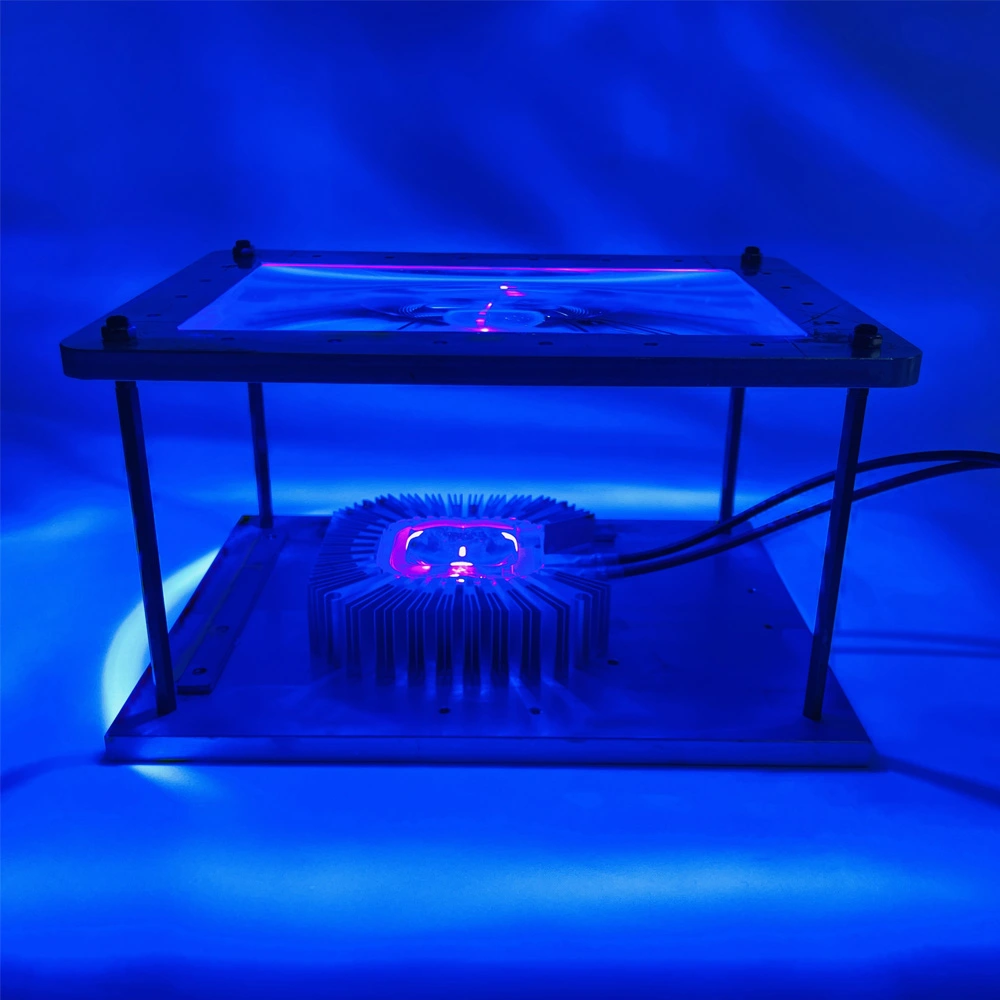
►Size:6.8 Inch
►Resolution :8520*4320 dots


The DBM068M9K01 6.8-inch 9K Mono LCD Open Cell is an ultra-high-resolution display solution designed for advanced resin 3D printers, professional additive manufacturing equipment, and precision machine interfaces. With a native 8520 × 4320 resolution, ultra-fine 18 × 18 μm pixel pitch, LTPS TFT technology, and a dual-port 8-lane MIPI D-PHY interface, this display is engineered for applications where extremely detailed image information and high-density display architecture are required.
Unlike a conventional finished display assembly, the DBM068M9K01 is supplied as a FOG (Film on Glass) open-cell configuration. This allows system designers greater flexibility when developing the optical stack, UV illumination system, backlight structure, and mechanical enclosure.
With a panel transmittance of approximately 4% typical with polarizer at 405 nm and a minimum contrast ratio of 300 under the specified 405 nm backlight condition, the module is particularly relevant to resin-based 3D printing systems using 405 nm light sources.
The DBM068M9K01 is designed around a 6.8-inch class display, with an active diagonal of approximately 6.77 inches. Its ultra-high 8520 × 4320 resolution provides an extremely dense pixel structure within a compact physical area.
The module uses LTPS TFT technology and a normal-black display mode. A typical frame rate of 20 Hz is specified, providing a display architecture optimized for high-resolution mono content and specialized imaging applications.
Its mechanical dimensions are also compact. The panel outline is approximately 161.36 × 89.88 mm, while the active area measures 153.36 × 77.76 mm. At approximately 43 g, the open-cell panel can help equipment manufacturers develop lightweight and space-efficient display assemblies.
6.8-inch class 9K Mono LCD open cell
8520 × 4320 ultra-high resolution
18 × 18 μm pixel pitch
LTPS TFT technology
Normal-black display mode
FOG / open-cell configuration
Dual-port 8-lane MIPI D-PHY interface
Typical 20 Hz frame rate
Optimized optical characteristics for 405 nm backlight systems
Minimum contrast ratio of 300 @ 405 nm
Typical panel transmittance of 4% with polarizer @ 405 nm
Compact 161.36 × 89.88 mm panel outline
Approximately 43 g panel weight
0°C to +70°C operating temperature
-10°C to +80°C storage temperature
| Category | Parameter | Specification | Unit / Note |
|---|---|---|---|
| General | Model | DBM068M9K01 | – |
| General | Display Size | 6.8 | inch |
| General | Active Diagonal | Approx. 6.77 | inch |
| General | Resolution | 8520 × 4320 | pixels |
| General | Dot Pitch | 18 × 18 | μm |
| General | Color Configuration | Mono | – |
| General | TFT Technology | LTPS TFT | – |
| General | Display Mode | Normal Black | – |
| General | Shipment Type | FOG / Open Cell | – |
| Mechanical | Active Area | 153.36 × 77.76 | mm |
| Mechanical | CF Outline | 161.36 × 86.31 | mm |
| Mechanical | Panel Outline | 161.36 × 89.88 | mm |
| Mechanical | Weight | Approx. 43 | g |
| Optical | Contrast Ratio | ≥300 | @ 405 nm BL |
| Optical | Panel Transmittance | Typ. 4% | @ 405 nm BL, with POL |
| Electrical | Frame Rate | Typ. 20 | Hz |
| Interface | Display Interface | MIPI D-PHY | Dual-port, 8-lane |
| Power | VDDIO | 1.7 / 1.8 / 1.9 | V, Min./Typ./Max. |
| Power | AVDD | 6.1 / 6.2 / 6.3 | V, Min./Typ./Max. |
| Power | AVEE | -6.3 / -6.2 / -6.1 | V, Min./Typ./Max. |
| Reliability | Operating Temperature | 0 to +70 | °C |
| Reliability | Storage Temperature | -10 to +80 | °C |
Specifications are based on the available DBM068M9K01 engineering information. Final electrical, optical, mechanical, timing, and production specifications should be confirmed with Aptus Display before mass production.
In advanced resin 3D printing, the display system plays an important role in how accurately a machine can present high-resolution visual information. Professional printers may require detailed interfaces for model preparation, layer inspection, exposure configuration, print monitoring, and machine status.
The 8520 × 4320 resolution of the DBM068M9K01 provides an exceptionally dense pixel structure. With an 18 μm pixel pitch, the panel is designed for applications where fine image information must be reproduced within a relatively small display area.
For equipment manufacturers, this high pixel density can support sophisticated graphical interfaces without requiring a significantly larger display footprint.
The mono architecture is also particularly relevant to specialized 3D printing display systems. Instead of being designed as a conventional consumer color display, the DBM068M9K01 is positioned as a specialized mono LCD open cell that can be integrated into a custom optical and illumination system.
One of the important characteristics of the DBM068M9K01 is its specified optical performance under a 405 nm backlight condition.
405 nm light is widely associated with UV-sensitive resin exposure systems used in many resin-based 3D printing architectures. When evaluating a mono LCD for this type of equipment, engineers need to consider more than nominal resolution. Optical transmittance, contrast, wavelength characteristics, panel construction, light uniformity, thermal behavior, and the complete illumination architecture all influence system performance.
The DBM068M9K01 specifies:
Minimum contrast ratio of 300 @ 405 nm backlight
Typical panel transmittance of 4% @ 405 nm backlight with polarizer
These values provide engineering reference points for evaluating the panel within a complete 405 nm optical system.
Because the product is supplied as an open cell, the final optical performance of the complete printer system will also depend on the selected light source, optical stack, backlight design, polarizer configuration, thermal management, and mechanical integration.
High-resolution displays require a suitable high-bandwidth interface between the display panel and the host system.
The DBM068M9K01 uses a dual-port 8-lane MIPI D-PHY interface. Each port is structured around four differential data lanes and a clock connection, allowing the display system to handle the data requirements associated with its 8520 × 4320 resolution.
The 51-pin connector also incorporates important control and power signals, including:
MIPI Port A
MIPI Port B
Differential data lanes
Clock connections
RESET
TE / Tearing Effect
FRM / BIST-related control
VDDIO
AVDD
AVEE
Multiple GND connections
The typical frame rate is specified at 20 Hz.
For system integration, engineers should verify processor compatibility, MIPI D-PHY support, lane configuration, power sequencing, display timing, PCB routing, signal integrity, and software driver compatibility before committing to production.
The DBM068M9K01 is supplied as an open-cell FOG configuration, rather than a complete finished display assembly.
This architecture can provide display-system manufacturers with additional design flexibility. Depending on the application, engineers can develop a customized optical and mechanical structure around the panel.
An open-cell approach may be useful when the equipment manufacturer needs to control:
UV illumination architecture
Backlight design
Optical distance
Cooling structure
Housing dimensions
Mechanical mounting
Optical uniformity
Internal light-source arrangement
For resin 3D printers, the ability to integrate the LCD with a customized 405 nm illumination system can be particularly important.
However, open-cell integration requires appropriate engineering controls. The LCD, polarizer, FPC, connector, optical layers, and surrounding components must be protected from excessive mechanical stress, heat, contamination, and improper handling.
Despite its 9K resolution, the DBM068M9K01 maintains a relatively compact panel footprint.
The active area is approximately 153.36 × 77.76 mm, while the panel outline is approximately 161.36 × 89.88 mm. The panel weighs approximately 43 g.
This combination of high resolution and compact dimensions can help 3D printer manufacturers design modern equipment without allocating excessive enclosure space to the display system.
The module can be considered for compact resin printers, professional desktop systems, specialized industrial machines, and custom additive manufacturing equipment.
The DBM068M9K01 is specified for an operating temperature range of 0°C to +70°C and a storage temperature range of -10°C to +80°C.
For equipment manufacturers, temperature management is especially important when integrating an LCD with a UV illumination system. Light sources and associated electronics can generate heat that may increase the local temperature around the display.
Therefore, the display's rated temperature range should be evaluated together with the complete printer's thermal architecture.
During engineering validation, manufacturers should consider:
Local LCD temperature
UV light-source heat
Thermal dissipation
Optical uniformity
FPC routing
Mechanical stress
Connector protection
ESD protection
Power sequencing
Humidity and condensation
Long-term operating conditions
The actual reliability of the finished equipment depends on the complete system design rather than the LCD panel alone.
The DBM068M9K01 is particularly relevant to resin-based SLA equipment that requires a specialized high-resolution mono display and 405 nm optical architecture.
Industrial 3D printing systems can use the display as part of a machine-control or monitoring architecture, providing operators with detailed visual information within a compact interface.
Shenzhen Aptus Technology Co., Limited provides TFT-LCD, mono LCD, and specialized display solutions for professional equipment, industrial applications, and advanced 3D printing systems.
Aptus Display combines product sourcing, engineering support, customization consultation, and project-oriented display services. Our team works with equipment manufacturers to evaluate important display parameters including resolution, interface, mechanical dimensions, optical characteristics, operating temperature, power requirements, and application environment.
For advanced 3D printing applications, selecting a display requires more than comparing screen size and resolution. Engineers need to evaluate the entire display architecture, including the LCD panel, illumination system, controller, interface, mechanical structure, thermal design, and software.
Aptus Display supports customers during product evaluation with technical documentation, samples, mechanical information, electrical specifications, interface information, and engineering consultation.
Aptus has experience supporting display requirements for professional equipment that requires specialized resolution, interfaces, mechanical configurations, and environmental performance.
Our engineering support covers display interface evaluation, optical characteristics, mechanical integration, electrical requirements, thermal considerations, and project-specific display solutions.
Product specifications are documented using defined engineering parameters. Key information such as resolution, dot pitch, active area, interface architecture, electrical voltage ranges, and temperature specifications is clearly identified to support technical evaluation.
For display projects, successful integration depends on reliable technical communication as well as product quality. Aptus Display provides support for sample evaluation, engineering discussions, documentation, customization consultation, and volume supply planning.
The DBM068M9K01 provides an ultra-high 8520 × 4320 mono resolution with an 18 × 18 μm dot pitch.
No. It is supplied as a FOG open-cell LCD configuration. This allows system manufacturers to develop their own compatible optical, backlight, and mechanical integration architecture.
Yes. Its ultra-high resolution, mono architecture, and specified optical characteristics at 405 nm make it particularly relevant to advanced resin-based 3D printing systems. Final compatibility should be evaluated against the complete optical and electrical system.
The DBM068M9K01 uses a dual-port 8-lane MIPI D-PHY interface through a 51-pin connector.
The specified typical frame rate is 20 Hz.
The active area is approximately 153.36 × 77.76 mm, while the panel outline is approximately 161.36 × 89.88 mm. The panel weighs approximately 43 g.
The operating temperature range is 0°C to +70°C, and the storage temperature range is -10°C to +80°C.
Under the specified 405 nm backlight condition, the minimum contrast ratio is 300, while typical panel transmittance with polarizer is approximately 4%.
Yes. Aptus Display can support customers with product samples, technical documentation, mechanical drawings, electrical information, interface details, and project-specific engineering discussions.
Project-specific requirements can be discussed with the Aptus Display engineering team. Depending on the project, discussions may include optical matching, mechanical integration, touch-panel requirements, interface considerations, and other display-system requirements.
If you are developing an advanced SLA printer, resin 3D printer, professional additive manufacturing system, or specialized high-resolution display application, the DBM068M9K01 provides an exceptional combination of 9K resolution, mono LCD architecture, LTPS TFT technology, 405 nm optical characteristics, and dual-port 8-lane MIPI connectivity.
👉 Request a quote or sample
📧 Or email us directly: info@aptusdisplay.com
Click here for the complete product catalog
LCD driver board: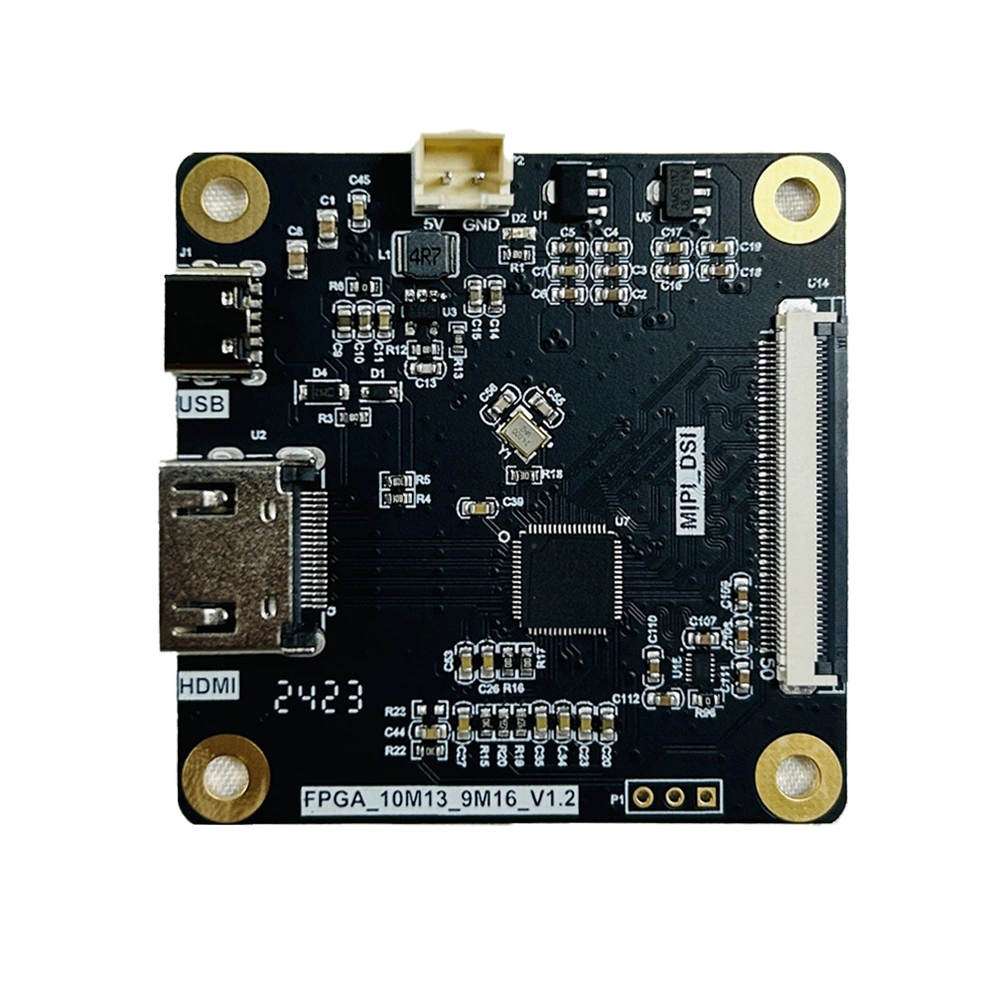
UV curing light systems: