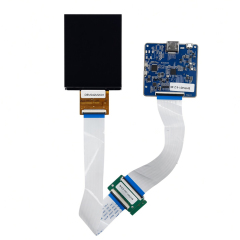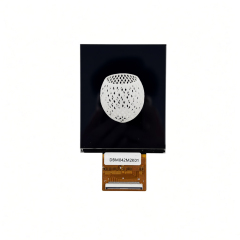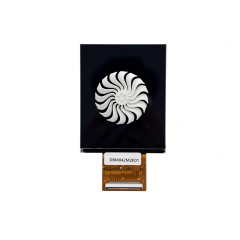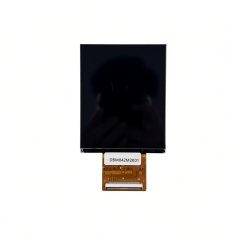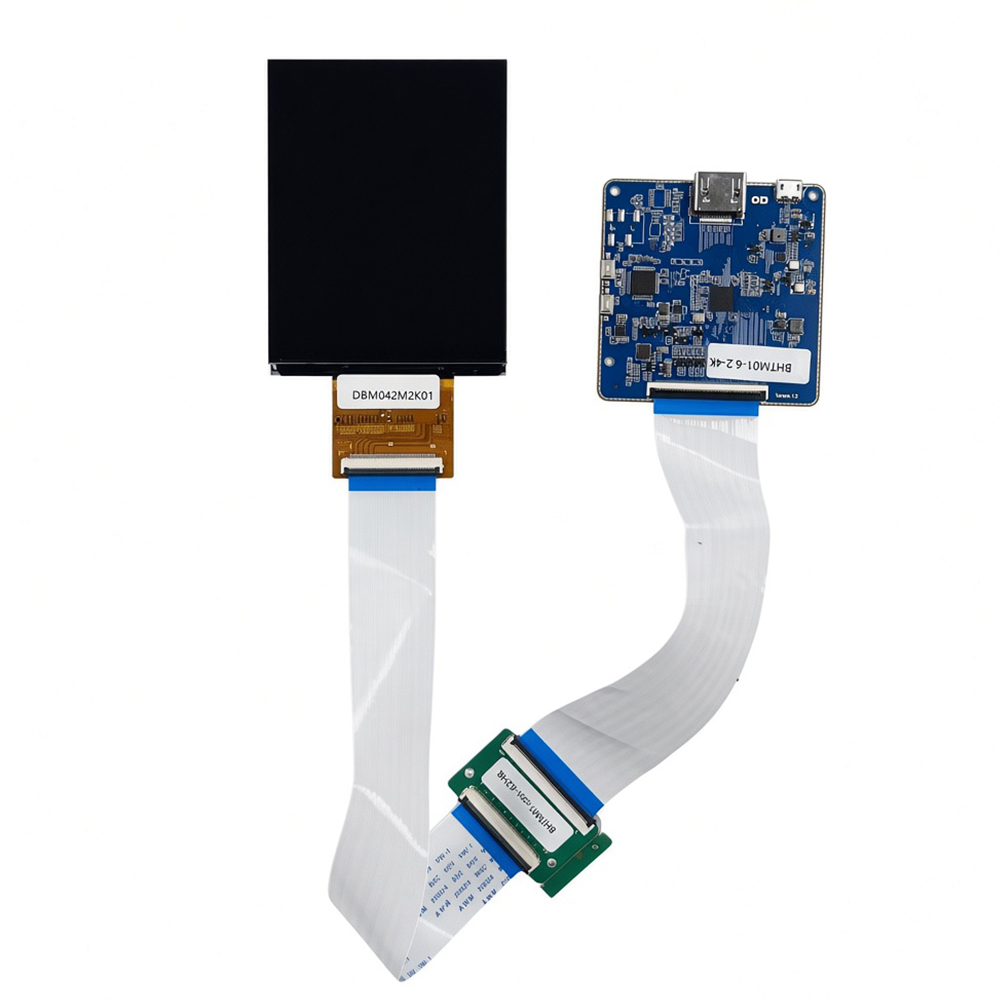
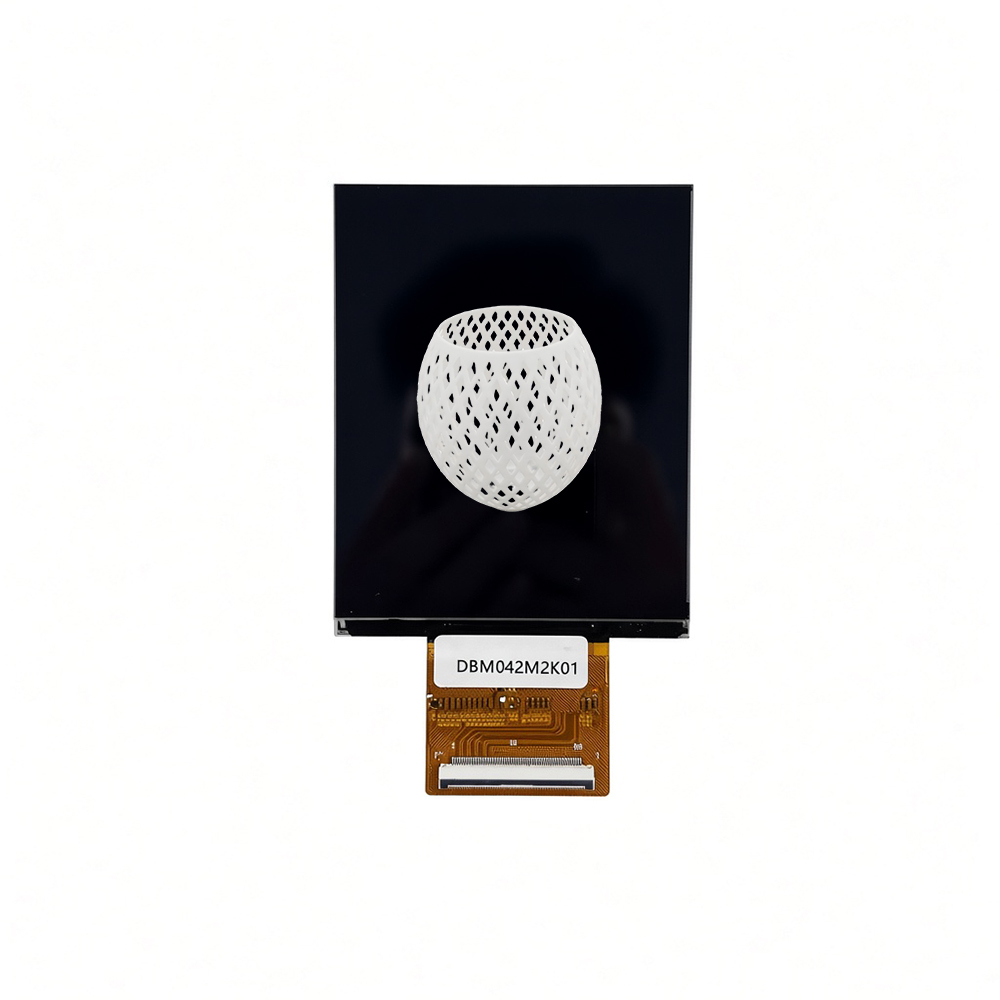
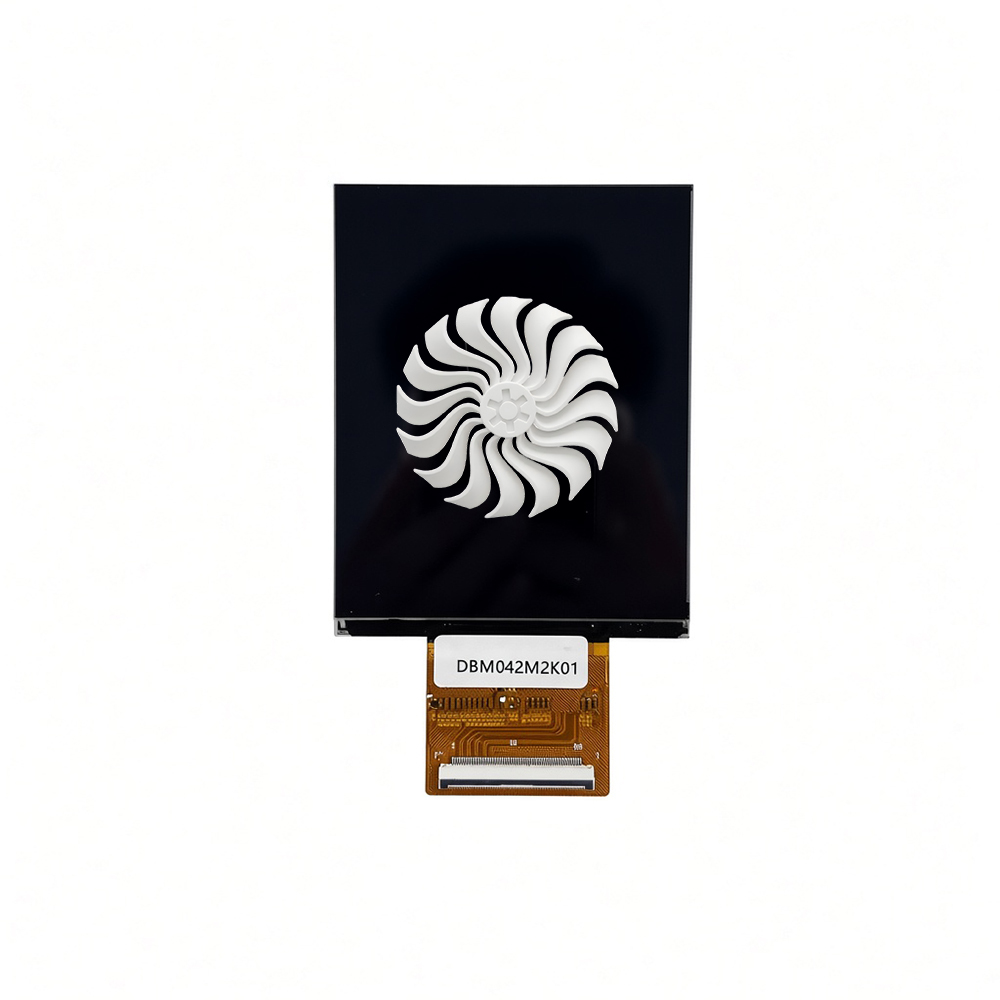
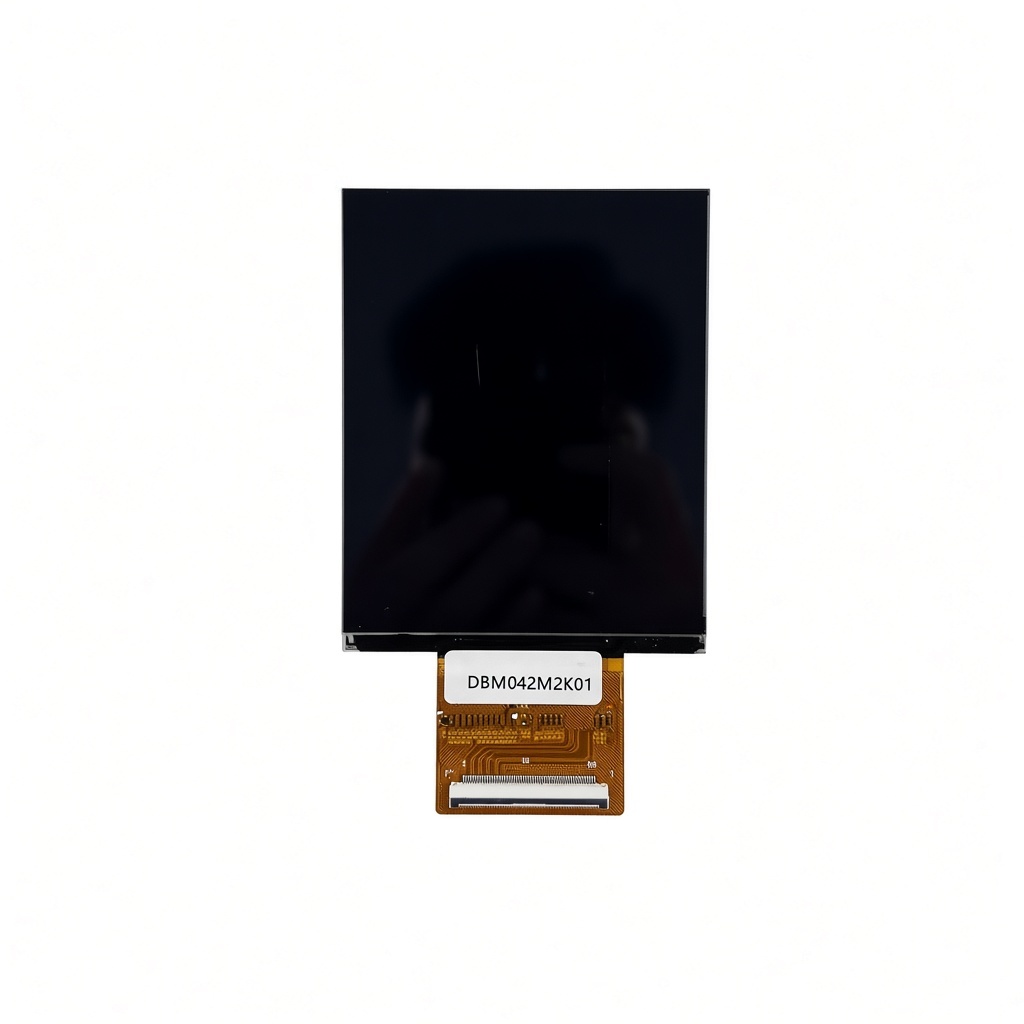
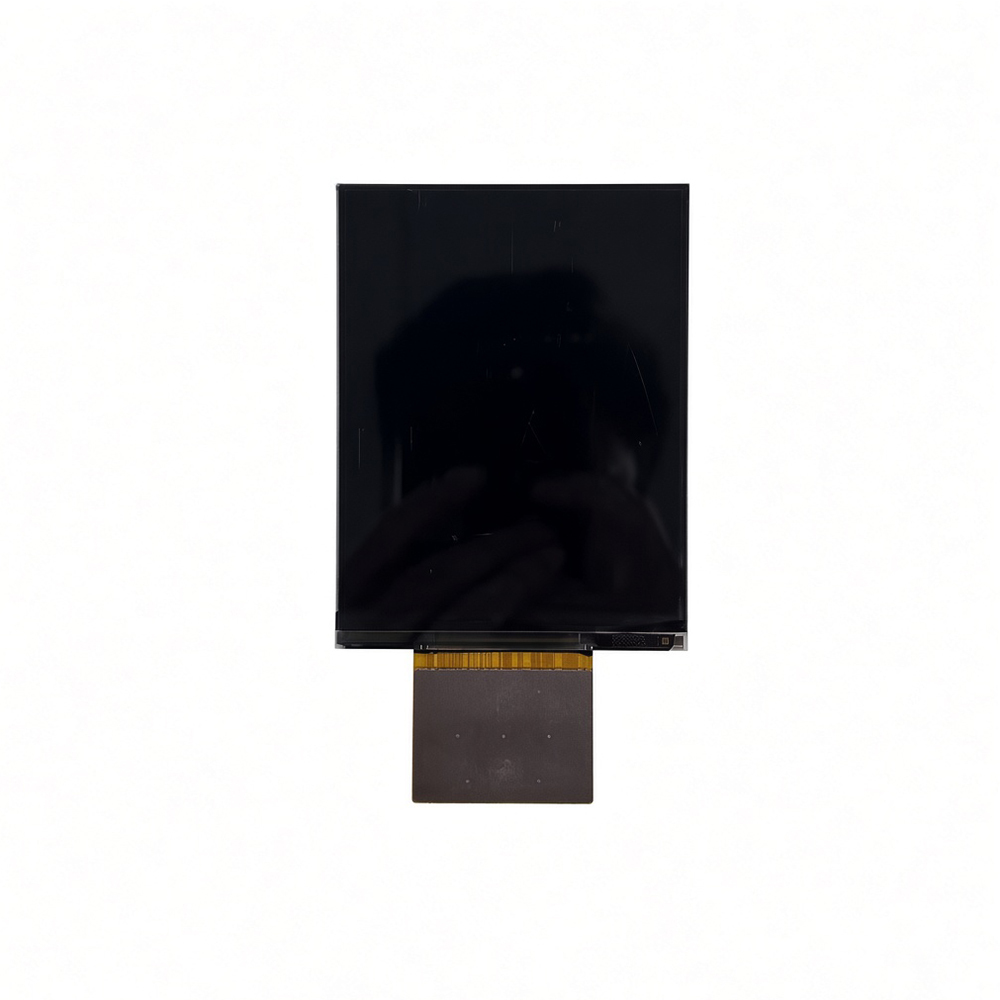
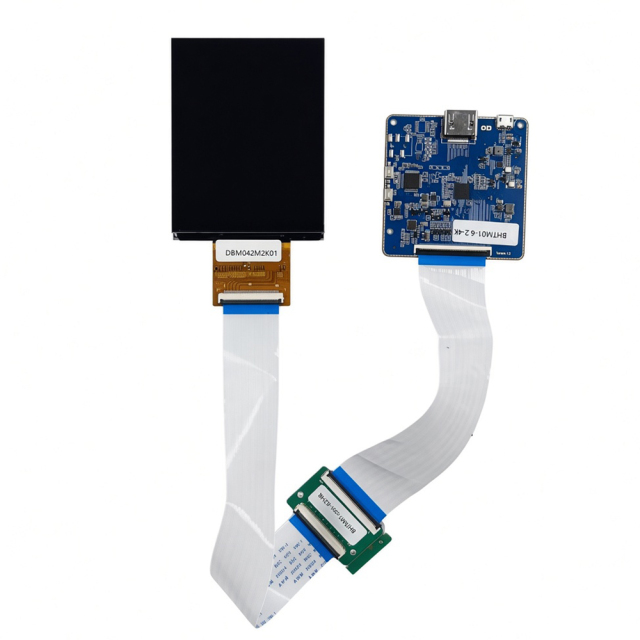
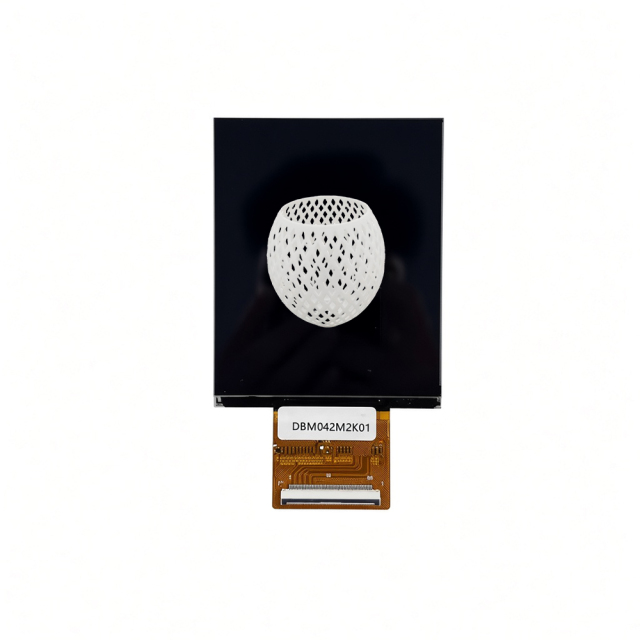
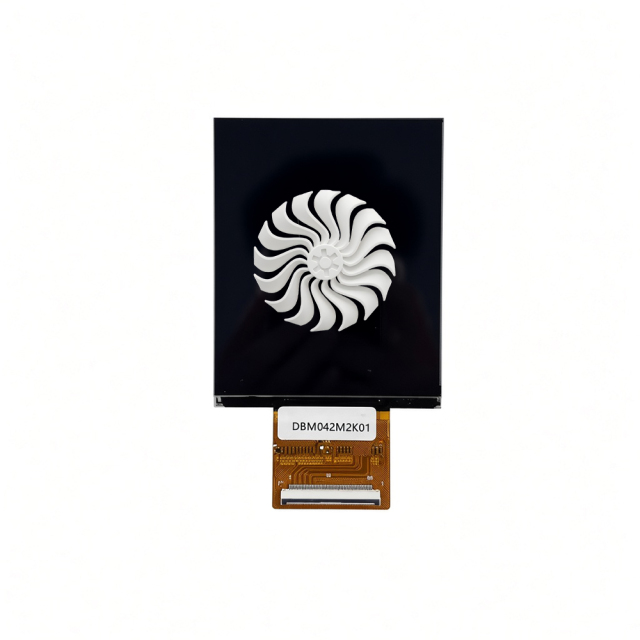
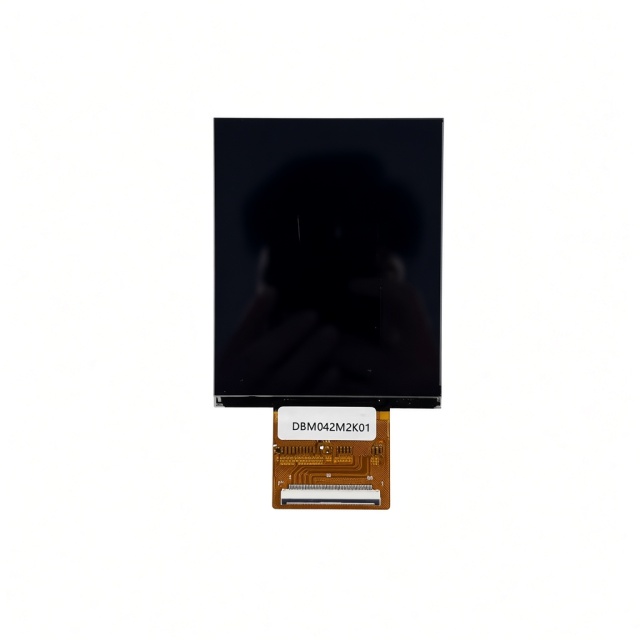
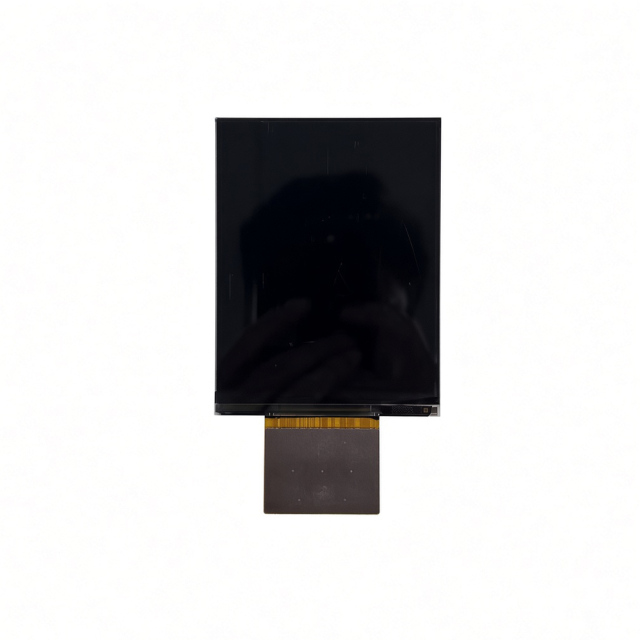
The DBM042M2K01 is a 4.2-inch 1860 × 2400 Mono TFT-LCD module designed specifically for small resin 3D printers and compact MSLA 3D printing systems. With an ultra-fine 35 μm × 35 μm pixel size, 405 nm optical specifications, 4-lane MIPI DSI interface, and a slim 1.16 mm module thickness, this high-resolution Mono LCD is designed for compact resin printers that require detailed UV exposure patterns within a small machine footprint.
Unlike a conventional color display used mainly for user interfaces, the DBM042M2K01 is designed to work as a Mono LCD exposure screen in an LCD-based resin 3D printer. The LCD works together with a compatible UV light source, optical system, resin vat, and printer controller to reproduce sliced images layer by layer. Its high pixel density provides the fine image structure required for detailed resin printing.
The DBM042M2K01 is developed around the requirements of small-format resin 3D printing.
Compact resin 3D printers typically have a limited build area and a restricted internal installation space. However, users still expect high-detail prints with sharp edges, fine structures, and accurate reproduction of miniature models.
The DBM042M2K01 combines a 4.2-inch display size with 1860 × 2400 resolution, creating a pixel size of only approximately 35 μm. This high pixel density makes the LCD particularly suitable for small resin printers where detailed XY exposure is an important part of the machine design.
The Mono LCD acts as the image masking layer in the UV exposure system. During printing, the printer controller sends each sliced layer image to the LCD. The UV light source then passes through the required areas of the LCD to cure the corresponding resin.
This makes the DBM042M2K01 more than a standard display module. It is an exposure-oriented Mono LCD solution for compact resin 3D printing systems.
4.2-inch Mono TFT-LCD module
1860 × 2400 resolution
Approximately 35 μm × 35 μm pixel size
Designed for small resin 3D printers
Suitable for compact MSLA and LCD-based resin printing systems
Optical specifications measured at 405 nm
4-lane MIPI DSI interface
6% minimum / 7% typical transmittance at 405 nm
380 minimum / 400 typical contrast ratio at 405 nm
Wide viewing angle in all directions
Ultra-thin 1.16 mm module thickness
Compact mechanical dimensions
Operating temperature from -20°C to +70°C
Maximum current consumption of 150 mA
| Parameter | Specification | Unit |
|---|---|---|
| Model | DBM042M2K01 | — |
| Application | Small Resin 3D Printer | — |
| LCD Type | TFT (MONO), Transmissive | — |
| Display Size | 4.2 | inch |
| Resolution | 1860 × 2400 | pixels |
| Pixel Size | 0.035 × 0.035 | mm |
| Viewing Area | 65.1 × 84.00 | mm |
| Outline Dimensions | 69.28 × 92.82 × 1.16 | mm |
| Interface | 4-Lane MIPI DSI | — |
| Viewing Angle | All directions, 80° min / 85° typ | degree |
| Transmittance at 405 nm | 6 min / 7 typ | % |
| Contrast Ratio at 405 nm | 380 min / 400 typ | — |
| Response Time (Tr + Tf) | 25 typ | ms |
| Operating Temperature | -20 to +70 | °C |
| Storage Temperature | -30 to +80 | °C |
| IOVCC | 1.7–1.9 | V |
| VSP | +5.5 | V |
| VSN | -5.5 | V |
| Maximum Current Consumption | 150 | mA |
Note: Product specifications should be verified against the latest official DBM042M2K01 datasheet before final production integration. Optical performance should be evaluated together with the customer's UV light source and complete 3D printing optical system.
Resolution is a key consideration when selecting a Mono LCD for a small resin 3D printer.
The DBM042M2K01 provides 1860 × 2400 pixels in a compact 4.2-inch format. With a pixel size of approximately 35 μm, the module provides a dense exposure image structure suitable for detailed resin printing.
In an LCD/MSLA resin printer, a sliced 3D model is converted into a sequence of two-dimensional layer images. Each layer is displayed on the Mono LCD while the UV light source exposes the resin.
The smaller the LCD pixel structure, the finer the image pattern that can be generated at the LCD level.
This makes the DBM042M2K01 suitable for small printers designed for applications such as:
Miniature model printing
Figure and collectible printing
Jewelry prototyping
Dental model production
Small engineering prototypes
Detailed hobby resin printing
Small decorative parts
Precision miniature components
The LCD's 35 μm pixel size should not be considered the sole specification determining final print accuracy. Actual print detail also depends on the optical system, resin properties, UV intensity, exposure parameters, mechanical accuracy, LCD alignment, and printer calibration.
The DBM042M2K01 provides optical specifications measured at 405 nm, making it particularly relevant to resin 3D printers using compatible 405 nm UV illumination.
The module specifies:
405 nm transmittance: 6% minimum / 7% typical
405 nm contrast ratio: 380 minimum / 400 typical
These specifications are important because the LCD operates as part of the UV exposure path rather than simply functioning as a visual user-interface screen.
A typical LCD-based resin 3D printer uses the following optical structure:
405 nm UV Light Source → Optical System → Mono LCD → Resin Vat → UV Resin
The UV light source generates the curing energy. The optical system distributes the light, while the Mono LCD controls the exposure pattern. The UV energy then reaches the resin through the corresponding exposure areas.
For this reason, printer manufacturers should evaluate the DBM042M2K01 together with their actual 405 nm light source, optical distance, reflector or lens system, resin vat, resin formulation, and exposure settings.
The DBM042M2K01 is designed as a Mono LCD exposure screen, making it suitable for compact LCD/MSLA resin 3D printer architectures.
During the printing process, slicing software converts the 3D model into individual layers. The printer controller sends each layer image to the LCD through the MIPI DSI interface.
The Mono LCD then creates the corresponding exposure pattern.
When the UV light is activated, the required areas of resin are cured according to the displayed layer image. After exposure, the printer moves the build platform and continues with the next layer.
This process is repeated hundreds or thousands of times until the complete model is produced.
The DBM042M2K01's high pixel density therefore contributes to the image definition of each exposure layer.
The module measures only 69.28 mm × 92.82 mm × 1.16 mm, making it suitable for compact printer architectures.
For a small resin 3D printer, the LCD must fit within the optical and mechanical structure while leaving sufficient space for the UV LED system, heat dissipation, resin vat, build platform, Z-axis mechanism, controller board, power system, and enclosure.
The DBM042M2K01's 4.2-inch size provides an appropriate display footprint for compact resin printing platforms.
Its 1.16 mm thickness also provides flexibility for mechanical and optical integration.
Printer manufacturers can evaluate the LCD based on their required:
Build area
Optical distance
LCD mounting structure
UV light arrangement
Resin vat design
Cooling system
Printer enclosure
The final mechanical installation should always be validated using the official mechanical drawing.
The DBM042M2K01 uses a 4-lane MIPI DSI interface for high-speed image transmission.
This interface allows the printer's main controller to communicate with the high-resolution LCD using a compact digital connection.
For a small 3D printer, the MIPI interface can help maintain a compact electronics architecture while supporting the high-resolution image data required by the 1860 × 2400 panel.
During controller board development, engineers should consider:
MIPI differential signal routing
PCB impedance control
Differential pair length matching
Power integrity
Ground design
Connector layout
EMI control
Reset timing
Power sequencing
The complete interface pinout and electrical timing should be implemented according to the latest DBM042M2K01 technical documentation.
Thermal management is an important consideration when integrating a Mono LCD into a resin 3D printer.
The UV light source can generate considerable heat during continuous printing. Depending on the printer's optical architecture, some of this heat may be transferred toward the LCD and surrounding components.
The DBM042M2K01 specifies an operating temperature range of -20°C to +70°C.
During product development, printer manufacturers should measure the LCD temperature during:
Long-duration printing
Continuous UV exposure
High ambient temperature operation
Maximum-intensity UV operation
Repeated printing cycles
Appropriate airflow, heat dissipation, optical separation, and mechanical design should be considered to maintain the LCD within its specified operating conditions.
The module can be integrated into compact MSLA printer architectures where a Mono LCD is used to mask UV exposure patterns.
Small resin printers used for miniatures, figures, collectibles, and highly detailed models can benefit from the high pixel density of the DBM042M2K01.
The module can also be used in compact resin printers designed for producing small engineering prototypes and precision components.
The 1860 × 2400 resolution and approximately 35 μm pixel size provide a high-density exposure matrix in a compact display format.
The 4.2-inch panel and 1.16 mm thickness support the development of smaller printer architectures.
Optical data measured at 405 nm allows manufacturers to evaluate the module within compatible UV resin printing systems.
The 4-lane MIPI interface provides a high-speed digital connection suitable for compact printer controller designs.
The Mono TFT architecture is suitable for applications where the LCD is used to control UV exposure patterns rather than display conventional color content.
Aptus Display can provide product documentation, samples, technical information, and engineering support for customers developing new small resin 3D printers.
Reliability is important for a Mono LCD operating repeatedly inside a resin 3D printer.
The DBM042M2K01 product specifications include environmental and reliability testing such as high-temperature operation, low-temperature operation, high-temperature and humidity storage, thermal shock, vibration, drop testing, and ESD evaluation.
Representative operating tests include:
High-temperature operation at 70°C for 168 hours
Low-temperature operation at -20°C for 168 hours
High-temperature and humidity storage
Thermal shock evaluation
Vibration testing
Drop testing
ESD testing
Display inspection also evaluates functional and visual quality, including display lines, spots, foreign particles, and other potential display defects.
For resin 3D printer applications, system-level testing is also recommended. Manufacturers should evaluate the LCD under actual UV exposure, thermal conditions, printing cycles, and operating environments before mass production.
Successful LCD integration requires more than simply connecting the panel to a controller board.
The printer manufacturer should first confirm the mechanical dimensions and optical position of the LCD.
The second step is to verify the MIPI interface and electrical requirements.
The third step is to evaluate the LCD with the intended 405 nm UV light source and optical system.
The fourth step is to measure thermal behavior during continuous printing.
Finally, the complete system should be tested using the target resin and printing parameters.
Important integration factors include:
LCD-to-UV light alignment
UV intensity
Optical uniformity
LCD temperature
Exposure time
Resin formulation
Resin layer thickness
MIPI signal quality
Mechanical stability
Long-term printing reliability
This system-level validation helps ensure that the LCD performs correctly within the complete 3D printer rather than only under laboratory conditions.
Shenzhen Aptus International Co., Limited, operating under the Aptus Display brand, specializes in TFT-LCD modules and customized display solutions for OEM and ODM applications.
For the resin 3D printing industry, Aptus Display provides Mono LCD solutions designed around the requirements of compact and high-resolution printing systems.
Our capabilities include:
Mono LCD solutions for resin 3D printers
Engineering sample evaluation
Technical documentation
Production supply support
Aptus Display works with customers from the initial LCD evaluation stage through prototype development and volume production.
For a small resin 3D printer project, our engineering team can evaluate the required LCD size, resolution, pixel size, interface, UV wavelength, optical configuration, mechanical dimensions, and production requirements.
The DBM042M2K01 is a 4.2-inch 1860 × 2400 Mono TFT-LCD module designed for small resin 3D printers and compact MSLA printing systems.
Yes. The product is intended for use as a Mono LCD exposure screen in small resin 3D printers, rather than as a general-purpose consumer display.
The resolution is 1860 × 2400 pixels.
The pixel size is 0.035 × 0.035 mm, approximately 35 μm.
The DBM042M2K01 is particularly suitable for small desktop resin 3D printers, compact MSLA printers, miniature model printers, jewelry resin printers, dental model printers, and small precision resin printing systems.
The product specifications include optical performance measurements at 405 nm, including transmittance and contrast ratio. Compatibility should be validated with the customer's actual UV light source and optical system.
The DBM042M2K01 uses a 4-lane MIPI DSI interface.
No. It is a Mono TFT-LCD designed for high-resolution exposure imaging.
The specified operating temperature range is -20°C to +70°C.
The LCD determines the resolution and pixel structure of the exposure image. The 1860 × 2400 resolution and approximately 35 μm pixel size can support fine exposure patterns. However, final print quality also depends on the UV optical system, resin, exposure settings, mechanical accuracy, and printer calibration.
Yes. Customers developing small resin 3D printers can contact Aptus Display for sample evaluation, technical documentation, pricing, and engineering support.
If you are developing a small resin 3D printer, compact MSLA printer, miniature SLA system, or high-resolution LCD-based UV exposure platform, the DBM042M2K01 provides a compact 4.2-inch 2K Mono LCD solution.
With 1860 × 2400 resolution, approximately 35 μm pixel size, 405 nm optical specifications, 4-lane MIPI DSI connectivity, and a 1.16 mm thin profile, the module is designed to meet the requirements of compact resin printing systems where high image density and limited installation space are both important.
👉 Request a quote or sample
📧 Or email us directly: info@aptusdisplay.com
Click here for the complete product catalog