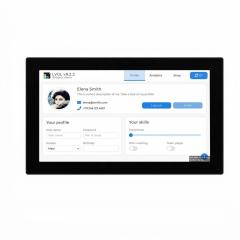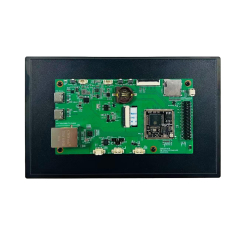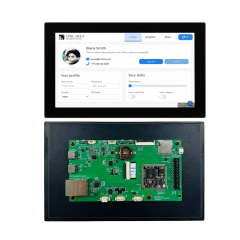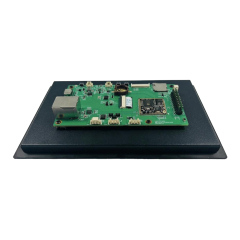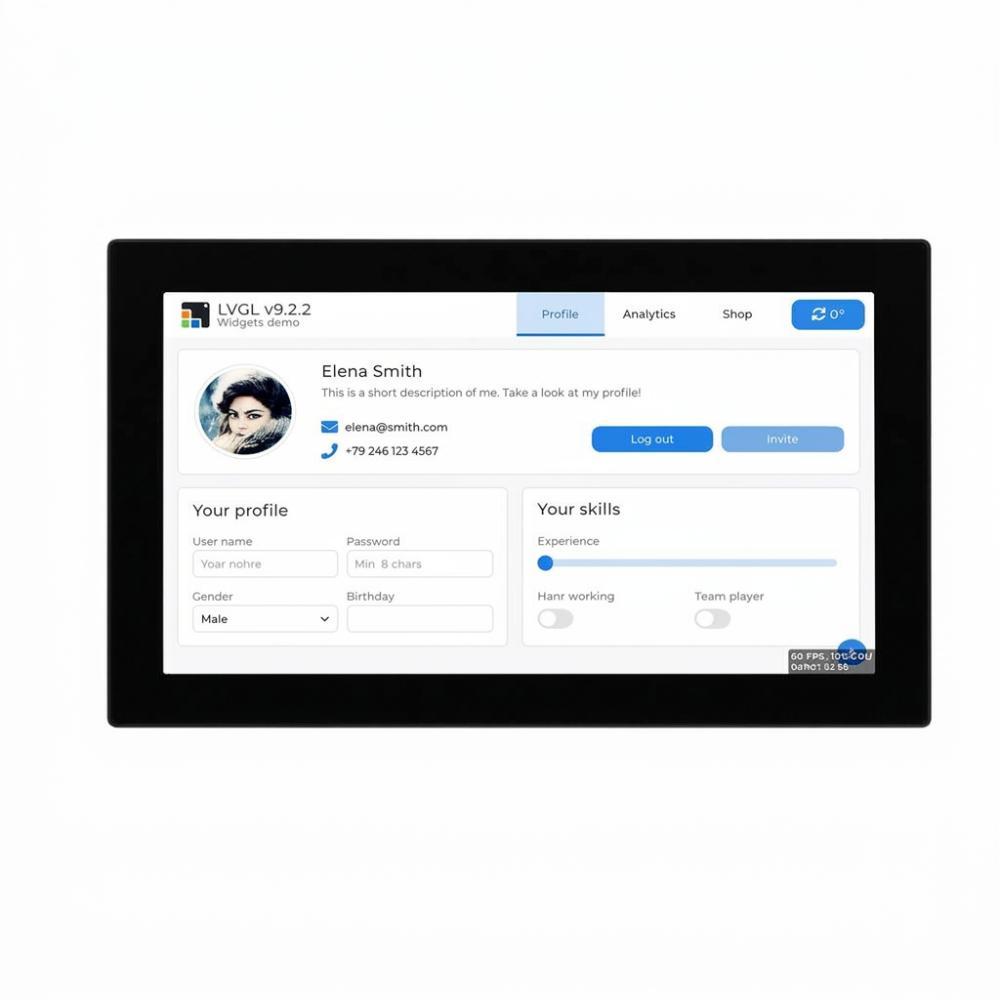
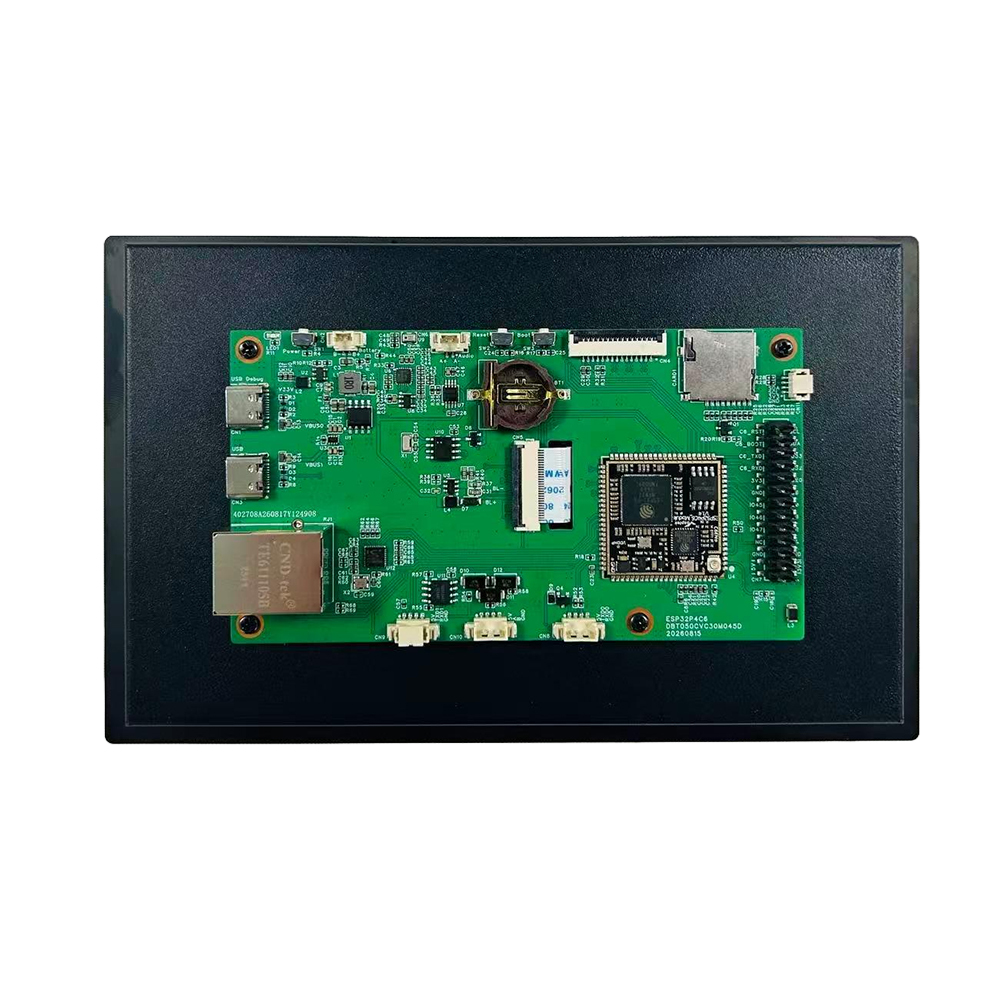
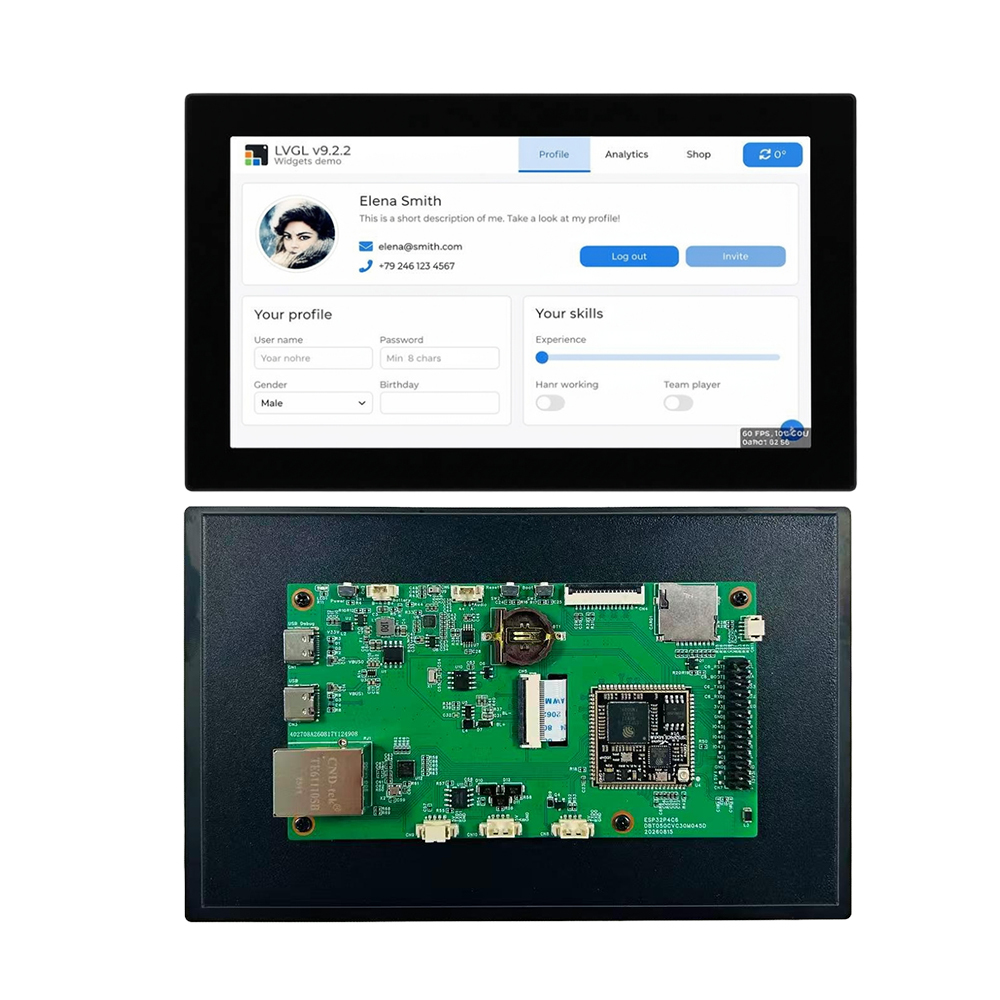
Develop custom embedded interfaces with the A070EC01 7-inch ESP32-P4 touch display kit, featuring 1024×600 resolution and flexible software development options.
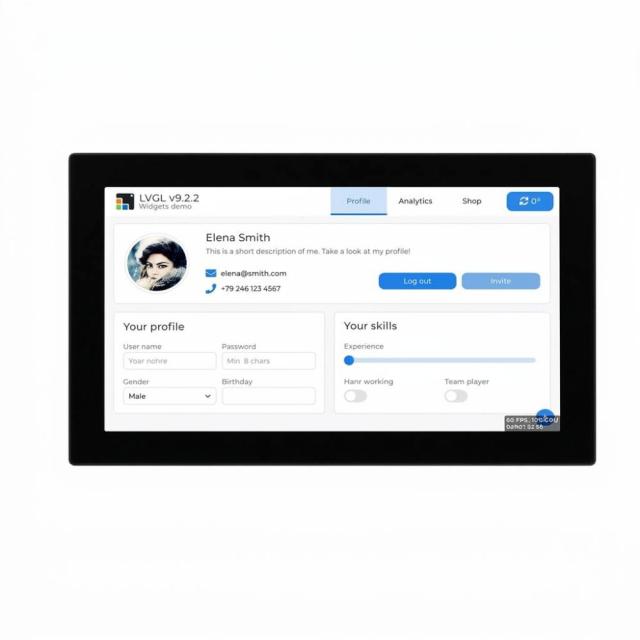
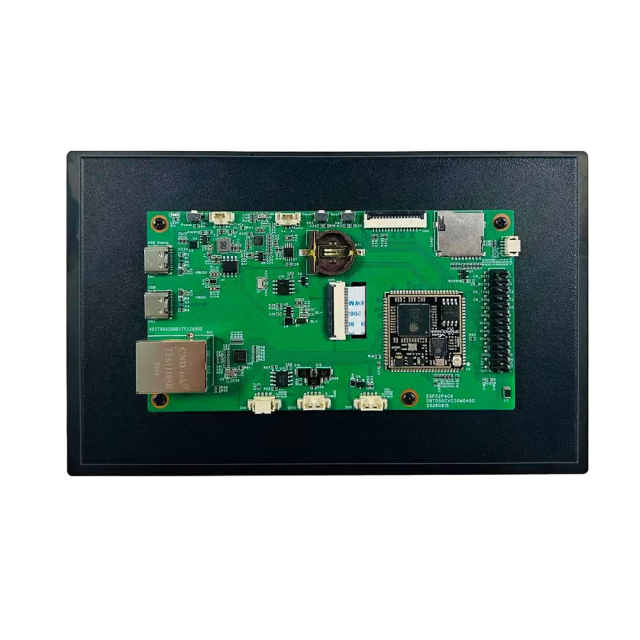
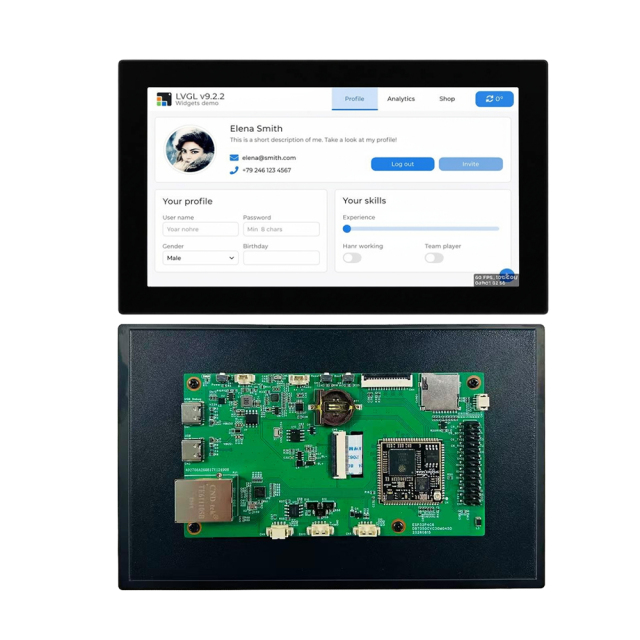
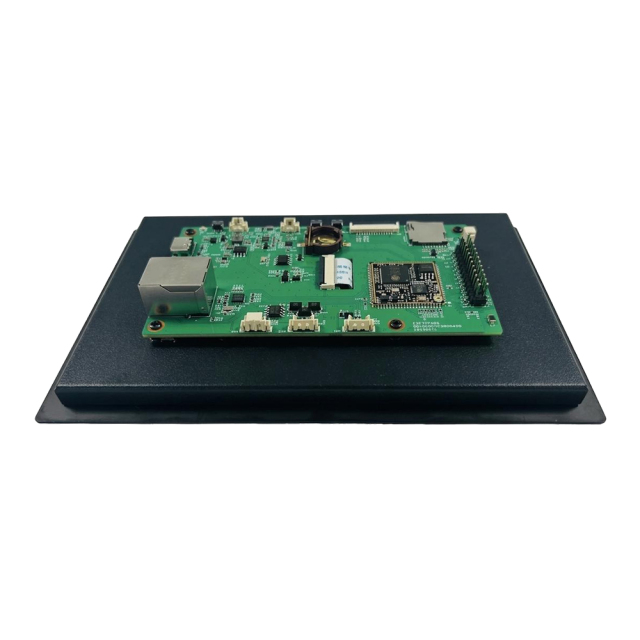
The A070EC01 is a 7-inch ESP32-P4 touch display development kit with a 1024 × 600 resolution, designed for developers who need an integrated hardware platform for creating their own embedded software applications. It combines a capacitive touch display, a dual-core RISC-V processor, onboard memory, multiple connectivity options, and a metal housing in one assembly.
For equipment manufacturers and embedded system developers, the display is often more than a component for presenting information. It is the interface through which users configure devices, monitor operating conditions, navigate functions, and interact with the underlying system. The A070EC01 provides a foundation for developing these interactions around the requirements of a particular product.
Its 7-inch display offers space for arranging information into separate visual areas, making it possible to develop interfaces with menus, status indicators, graphical controls, and application-specific information on the same page. With a resolution of 1024 × 600 pixels, developers can plan interface layouts around the dimensions and information hierarchy of their intended application.
The kit uses an ESP32-P4 dual-core RISC-V processor and includes 32 MB PSRAM and 16 MB Flash. It supports Arduino, ESP-IDF, and MicroPython development environments, allowing development teams to choose a suitable software workflow for their project.
The A070EC01 is intended as a development platform for customized applications. Users can create their own software rather than being limited to a single predefined interface. Final application functions depend on the software developed and the capabilities of the selected hardware configuration.
A 7-inch display gives developers room to organize information without placing every function on a separate page. For example, an equipment interface may place operating status, parameter values, navigation controls, and system messages in different areas of the display.
The A070EC01 uses a 1024 × 600 pixel resolution and supports 16.7 million colors with 8-bit color depth. Its specified brightness is 350 cd/m², and its response time is 30 ms.
These specifications provide a basis for developing graphical interfaces that combine text, icons, color-coded information, and touch-operated controls. Actual readability and visual performance should be evaluated under the lighting conditions of the intended installation.
Different products require different operating workflows. A controller may need configuration pages, while a monitoring device may prioritize data presentation and status changes. A self-service terminal may require a guided sequence of user interactions.
The A070EC01 allows developers to build software around these differences. Its ESP32-P4 processor provides the main processing platform, while the onboard PSRAM and Flash provide memory resources for application development and storage.
Development teams can define the interface structure, implement application logic, and refine the user experience according to their project requirements. The available memory and processing resources should be assessed against the complexity of the intended software.
The kit supports three listed development environments:
Arduino: An option for teams whose development workflow is based on the Arduino ecosystem.
ESP-IDF: The Espressif development framework for projects built around supported ESP hardware and software.
MicroPython: An alternative development environment for projects suited to Python-based embedded programming.
The appropriate choice depends on the software architecture, required libraries, development experience, and application constraints. Developers should verify the availability of the drivers, graphics libraries, and example code needed for their specific project.
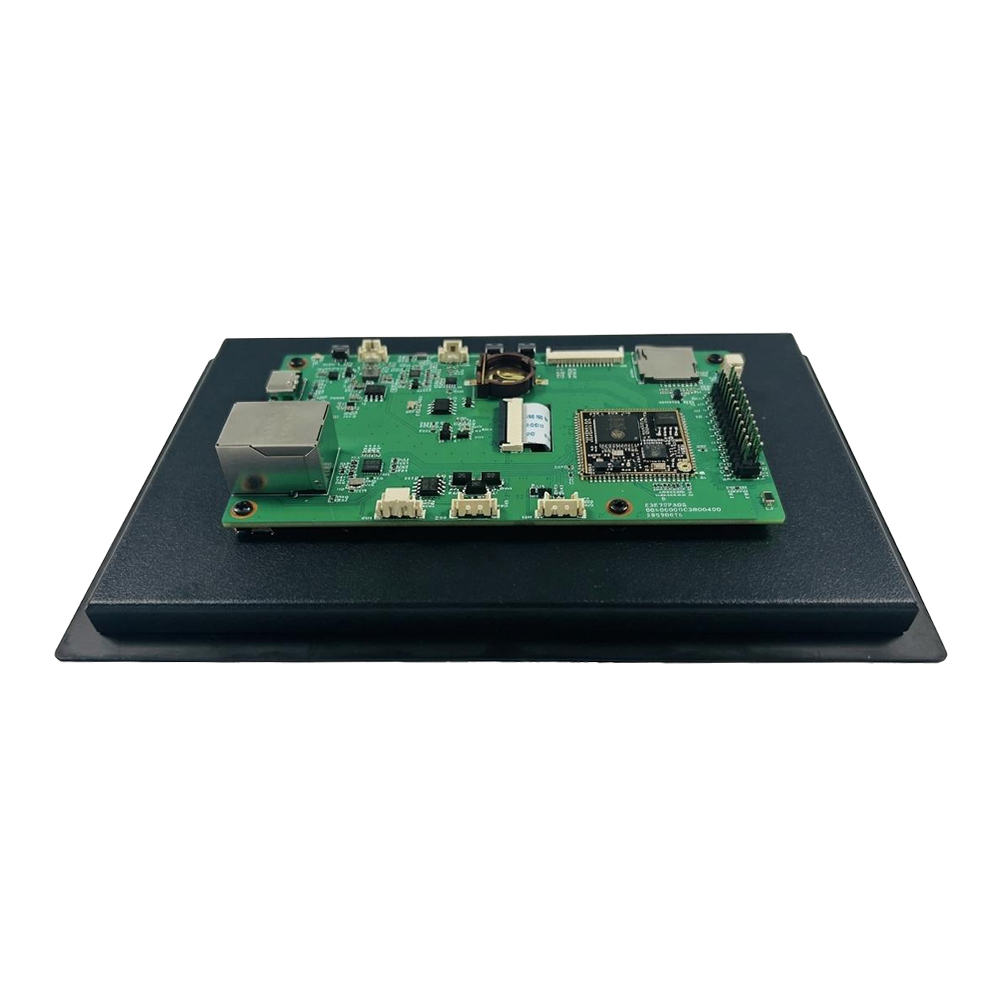
The A070EC01 lists USB Type-C, UART, GPIO, and Ethernet interfaces, along with a TF card slot. Its specifications also list Wi-Fi and Bluetooth connectivity.
These features provide several possible routes for development, peripheral communication, and network-connected applications. The actual role of each interface depends on the supported hardware configuration and software implementation.
Before development begins, it is advisable to document the required external connections, communication protocols, data flow, and peripheral dependencies. This helps determine whether the platform matches the project architecture.
The following table presents the product specifications supplied by Aptus.
| Parameter | Specification |
|---|---|
| Model | A070EC01 |
| Product Category | ESP32-P4 Touch Display Development Kit |
| Display Size | 7 inches |
| Touch Type | Capacitive touch |
| Resolution | 1024 × 600 pixels |
| Color Depth | 16.7 million colors, 8-bit |
| Active Area | 154.2144 × 85.92 mm |
| Brightness | 350 cd/m² |
| Response Time | 30 ms |
| Pixel Arrangement | RGB stripe |
| Viewing Direction | All o'clock |
| Main Controller | ESP32-P4 dual-core RISC-V |
| CPU Frequency | 360 MHz (HP) / 40 MHz (LP) |
| PSRAM | 32 MB |
| Flash | 16 MB |
| Listed Wireless Connectivity | Wi-Fi and Bluetooth |
| Storage Expansion | TF card slot |
| External Interfaces | USB Type-C, UART, GPIO, Ethernet |
| Supported Development Environments | Arduino, ESP-IDF, MicroPython |
| Power Input | 5 V via Type-C |
| Overall Power Consumption | ≤5 W |
| Operating Temperature | -20°C to +70°C |
| Storage Temperature | -30°C to +80°C |
| Relative Humidity | ≤90% |
| Housing | Metal |
| Housing Color | Matte black |
| Overall Dimensions | 180.2 × 112 × 27.89 mm |
| Weight | 319 g |
Specifications are based on the A070EC01 product datasheet. Confirm detailed interface assignments, software support, and integration requirements with Aptus before starting a project.
The A070EC01 can be evaluated in projects where developers need a programmable display interface with touch input. The following examples describe potential development directions, not pre-installed product functions.
Equipment developers can explore the A070EC01 for interfaces that present machine status, configurable parameters, operating modes, and maintenance information.
A 7-inch interface can be divided into functional areas, helping developers group related information and controls. Touch-operated menus can be designed around the sequence in which an operator uses the equipment.
The UART, GPIO, and Ethernet interfaces may be relevant when connecting the platform to external controllers or peripherals. Compatibility depends on the required protocol, electrical specifications, and software implementation.
For industrial use, engineers should also assess electrical noise, mounting, enclosure protection, and the environmental conditions of the complete equipment.
Smart devices often need a local interface for setup, status review, and user control. The A070EC01 can serve as a development platform for creating such interfaces.
Potential projects include connected appliance controllers, home automation panels, and device configuration terminals. Developers can create application-specific navigation, settings pages, status views, and visual feedback according to the functions of the target product.
Communication with external devices or home automation systems must be implemented using compatible hardware and software.
For connected equipment, a local display can make operating information easier to access without requiring users to rely exclusively on a separate computer or mobile application.
Developers can evaluate the A070EC01 for network-connected monitoring interfaces, status dashboards, and device management terminals. The available Ethernet and listed wireless connectivity options may support different system architectures, depending on the required network functions and software support.
The data source, communication protocol, update frequency, and network security requirements should be defined during application planning.
A capacitive touch display can support guided navigation and user input in compact information terminals or access-related equipment.
With the A070EC01, developers can create custom instruction pages, selection menus, input screens, and status messages. Integration with identification hardware, access-control systems, or other peripherals requires additional implementation and validation.
The development kit is also relevant when a company is evaluating a new product concept before finalizing its electronics and user interface.
Teams can use the integrated display platform to test layouts, demonstrate software workflows, validate user interactions, and establish hardware integration requirements. The resulting prototype can help clarify which functions are necessary and whether the platform meets the project's technical constraints.
A prototype evaluation does not automatically establish production readiness. Long-term reliability, manufacturing requirements, mechanical integration, and component availability should be reviewed separately.
Choosing a development kit is only the first step. The value of the A070EC01 depends on how well its hardware and software environment match the intended application.
A practical evaluation process can begin with four questions.
What information must the display present? Define the main data, navigation structure, graphical elements, and user actions. The 1024 × 600 resolution provides a defined canvas for planning the interface.
Which functions must the software perform? Identify the application logic, device controls, data processing, and communication requirements. These determine the complexity of the software and the resources it needs.
How will the display connect to the rest of the system? Document required interfaces, external peripherals, network protocols, and power requirements. Confirm compatibility before committing to the design.
Where will the finished product operate? Compare the real operating environment with the specified temperature and humidity limits. Determine whether additional mechanical or environmental protection is required.
Aptus can help customers review the product specifications and discuss relevant LCD display customization options. Any changes to the supplied hardware, enclosure, interfaces, or other components must be assessed and confirmed for the particular project.
The A070EC01 is a 7-inch ESP32-P4 touch display development kit with a 1024 × 600 resolution. It integrates a capacitive touch display, a dual-core RISC-V processor, onboard memory, and multiple connectivity options for embedded software development.
Yes. The kit supports Arduino, ESP-IDF, and MicroPython. Developers can create custom user interfaces and application logic within the capabilities of the hardware and selected software environment.
The display measures 7 inches diagonally and has a resolution of 1024 × 600 pixels. It supports 16.7 million colors, has a specified brightness of 350 cd/m², and a response time of 30 ms.
The A070EC01 includes 32 MB PSRAM and 16 MB Flash. Whether this is sufficient depends on the application's memory requirements, software framework, and interface assets.
The datasheet lists USB Type-C, UART, GPIO, and Ethernet, together with a TF card slot and Wi-Fi and Bluetooth connectivity. The required interface functions and software compatibility should be verified for each project.
The datasheet specifies a 5 V Type-C power supply and overall power consumption of no more than 5 W. Confirm power requirements under the intended operating conditions before integrating the kit into a larger system.
The specified operating temperature range is -20°C to +70°C, with a relative humidity specification of ≤90%. Suitability for a particular industrial environment depends on additional factors such as electrical noise, mounting, mechanical protection, and the actual operating conditions. The datasheet does not specify an IP rating.
Aptus provides LCD display products and customization services. Customers can discuss their project requirements with the team to determine whether relevant display, touch-panel, driver-board, cable, or mechanical options are available. The feasibility and scope of any customization require confirmation.
Shenzhen Aptus International Co., Ltd. has been active in the LCD industry since 2014, focusing on LCD display research and development, manufacturing, and marketing.
Aptus supplies TFT LCD modules, touch-panel LCD modules, LCD control boards, driver boards, cables, backlight solutions, and integrated display assemblies. Depending on project requirements, customization may cover display resolution, brightness, interface configuration, touch technology, cable design, backlight requirements, and mechanical structure.
The company has an experienced R&D team and ISO 9001 quality management certification. Aptus works with customers evaluating display components and customized solutions for industrial equipment, embedded systems, and other specialized applications.
The A070EC01 extends this offering to developers who need an integrated display platform for building and evaluating their own software applications.
If you are evaluating a 7-inch ESP32-P4 display development kit, contact Aptus to review the A070EC01 specifications and discuss your project requirements.
To help the team assess your needs, provide your intended application, software functions, operating environment, required connections, and estimated order quantity. If you have an existing device or a defined hardware architecture, sharing those requirements can also help clarify the suitability of the development kit.
👉 Request a quote or sample
📧 Or email us directly: info@aptusdisplay.com
Click here for the complete product catalog