
In modern industrial systems, embedded applications, and commercial electronics, the interface between a display controller and a TFT LCD module plays a critical role in overall system performance. While factors like screen size, resolution, and brightness often get attention, the choice of interface fundamentally impacts signal integrity, refresh rate, power consumption, and system reliability.
This comprehensive guide explains the common TFT LCD interfaces, compares their advantages and limitations, and provides practical guidance for designers selecting the right display modules for industrial, embedded, and commercial applications.
A TFT LCD module interface determines how pixel data and control signals are transmitted from your processor — whether it’s a microcontroller, FPGA, or SoC — to the display panel. Selecting the wrong interface can lead to integration challenges, slower refresh rates, or complex wiring. Choosing the right interface simplifies integration and enhances performance, especially in industrial and embedded environments.
Key factors affected by interface choice include:
Data throughput and achievable resolution
Power consumption and thermal management
Pin count and PCB routing complexity
Electromagnetic interference (EMI) and signal integrity
Compatibility with your chosen controller
Understanding these factors ensures that engineers can select a TFT LCD module that meets project requirements for reliability and long-term stability.
Different TFT LCD module interfaces offer varying advantages depending on application requirements. The most widely used interfaces in industrial and embedded displays include SPI, Parallel RGB, LVDS, and MIPI DSI.
The SPI interface is commonly used on small TFT LCD modules, typically from 1.8” to 2.8”. SPI uses minimal signal lines, usually clock, data, and chip select, making it ideal for compact industrial controllers and embedded terminals.
Advantages:
Minimal pins, simplifying PCB design
Easy integration with standard microcontrollers
Low power consumption, suitable for embedded systems
Limitations:
Limited bandwidth, not suitable for high-resolution graphics or video
Slower refresh rates compared to parallel or high-speed serial interfaces
Industrial & Embedded Applications:
SPI TFT modules are ideal for small industrial control panels, handheld data terminals, IoT devices, and embedded equipment requiring simple numeric or status displays. For example, a compact industrial sensor terminal may use an SPI TFT LCD module to show real-time readings without complex wiring.
Parallel RGB interfaces transmit multiple bits simultaneously, offering higher data throughput. These interfaces are common in medium-sized TFT LCD modules (4.3” – 7”) used in industrial settings.
Advantages:
Supports higher resolution than SPI
Compatible with many legacy microcontrollers
Straightforward timing control for embedded designs
Limitations:
Requires a larger number of pins, increasing PCB complexity
Higher power consumption and potential EMI issues
Less suitable for ultra-high-resolution displays
Industrial & Commercial Applications:
Parallel RGB TFT modules are perfect for mid-range industrial HMI panels, factory automation displays, embedded data collection terminals, and commercial kiosks. Their simplicity and compatibility make them a reliable choice for mid-resolution industrial and embedded displays.
LVDS is a high-speed differential signaling standard, widely used in industrial and commercial TFT LCD modules. It transmits data over wire pairs, offering excellent noise immunity and long-distance cable support.
Advantages:
High bandwidth for high-resolution panels
Excellent signal integrity over long cable connections
Reduced EMI compared to parallel interfaces
Limitations:
Requires LVDS-capable controller or bridge chip
Moderate PCB design complexity
Industrial Applications:
LVDS TFT LCD modules are commonly deployed in industrial control rooms, production monitoring panels, and commercial digital signage where long cable runs or high-resolution displays are required. For instance, a 10” LVDS TFT LCD module can provide clear visualization of real-time industrial processes in a control room.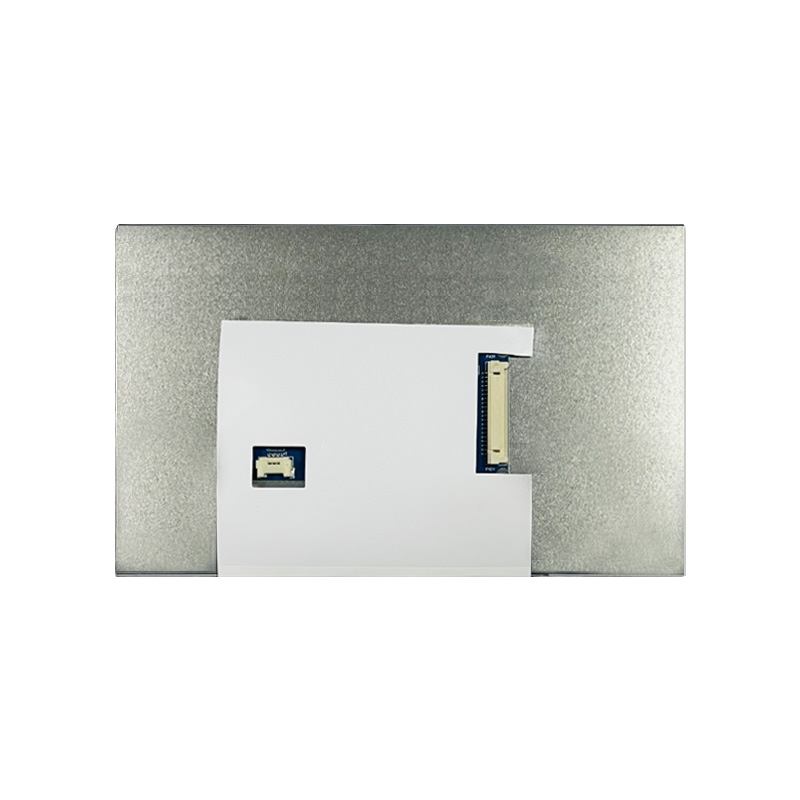
MIPI DSI combines high-speed serial transmission with a low pin count. While originally developed for mobile devices, it has become widely used in industrial and embedded high-resolution displays.
Advantages:
Very high data throughput, supporting Full HD and beyond
Low power consumption per bit
Reduced pin count for compact wiring and smaller connectors
Limitations:
Requires MIPI-capable processor or adapter
Protocol complexity is higher than SPI or parallel interfaces
Embedded & Industrial Applications:
MIPI TFT LCD modules are suitable for high-resolution industrial instrument panels, research and development prototype displays, and commercial interactive terminals. They allow high-quality graphics in compact embedded systems while maintaining signal reliability.
When choosing a TFT LCD module, consider the following factors:
Resolution & Refresh Rate:
Low-complexity UIs or static displays may use SPI or parallel interfaces, whereas high-resolution or dynamic content requires LVDS or MIPI.
Controller Compatibility:
Embedded MCUs often support SPI or parallel, while advanced SoCs or FPGAs may offer LVDS or MIPI lanes.
Board Complexity & Cost:
SPI and parallel reduce controller cost but increase wiring complexity. LVDS and MIPI reduce wiring but require compatible controller hardware.
Environmental Requirements:
Industrial and commercial environments benefit from LVDS or MIPI differential signaling for EMI resilience and long cable runs.
AptusDisplay provides a wide range of TFT LCD modules suitable for industrial and embedded applications:
RGB Interface TFTs: Ideal for mid-range industrial HMI panels, embedded data terminals, and instruments where MCU compatibility and moderate resolution are sufficient.
LVDS Interface TFTs: Suitable for industrial control panels, production monitoring, and commercial digital signage requiring long cable runs or high-resolution displays.
MIPI Interface TFTs: Recommended for high-resolution industrial instruments, R&D prototype systems, and commercial interactive terminals with compact board space.
By selecting the right TFT LCD module, engineers can ensure that industrial and embedded systems achieve optimal performance, reliability, and integration simplicity.
Match Interface to Controller Capabilities: Ensure your processor supports the chosen interface.
Maintain Signal Integrity: High-speed interfaces like LVDS and MIPI benefit from controlled impedance traces and careful PCB routing.
Use Frame Buffers if Needed: Displays without internal frame buffers require continuous data streaming, affecting processor load.
Connector Selection: LVDS and MIPI reduce pin count, enabling compact designs, while parallel RGB requires larger connectors.
Choosing the right interface is essential for balancing performance, power, cost, and integration complexity. From simple SPI displays to high-performance LVDS and MIPI panels, understanding interface trade-offs empowers engineers to design reliable and efficient industrial, embedded, and commercial systems.
With AptusDisplay’s versatile TFT LCD modules, projects can achieve optimal performance, durability, and design flexibility for industrial control panels, embedded instruments, and commercial terminals.

